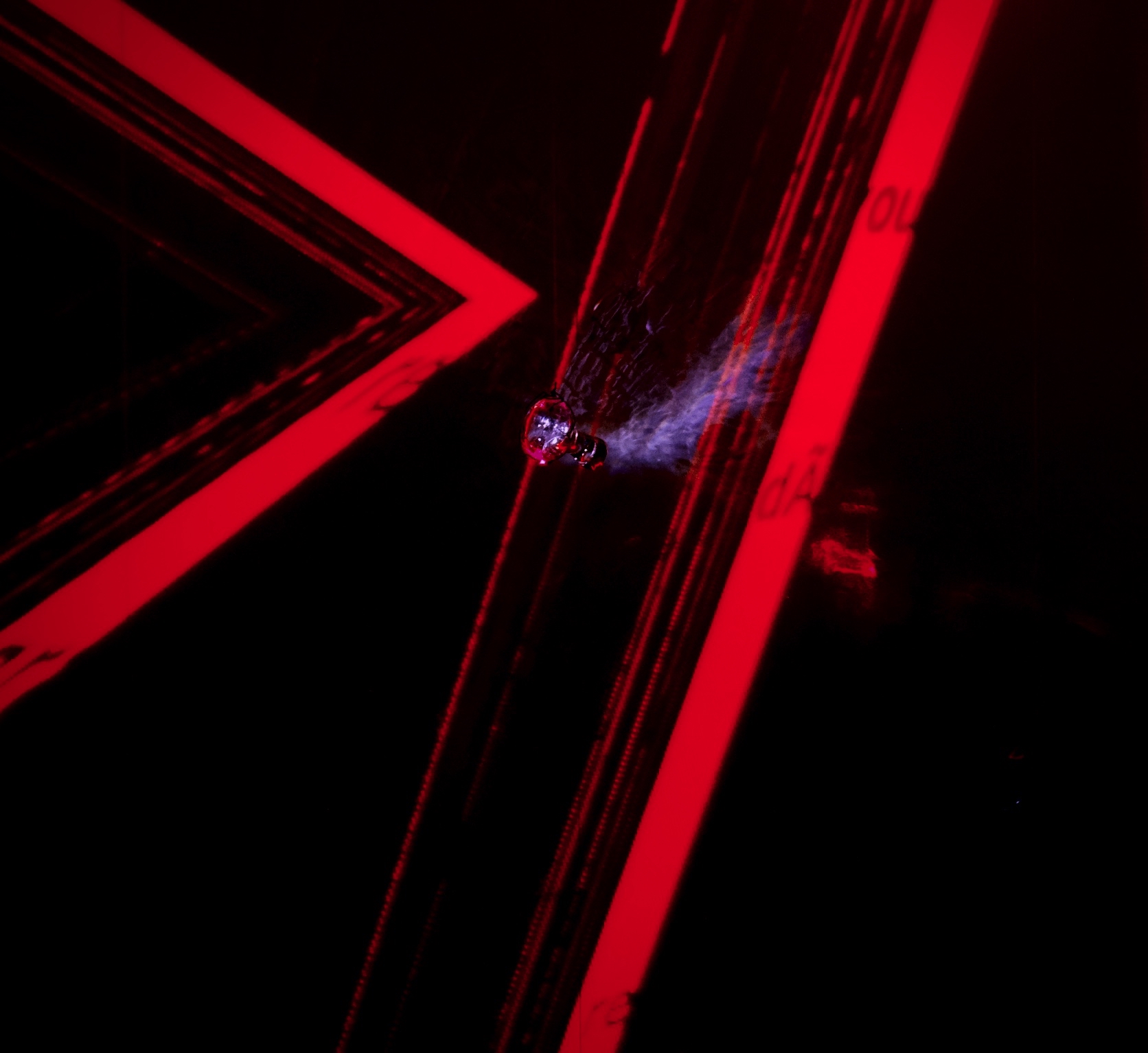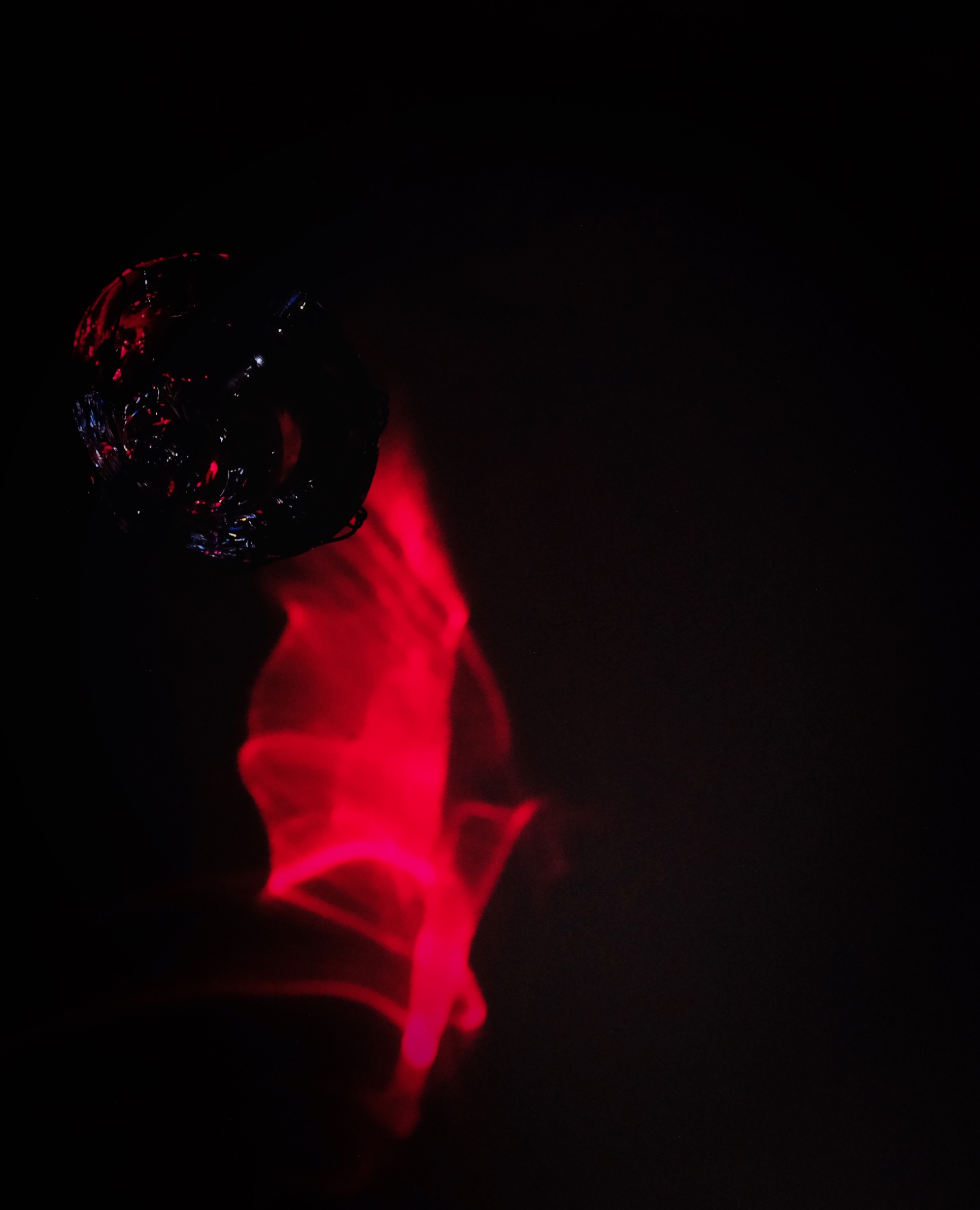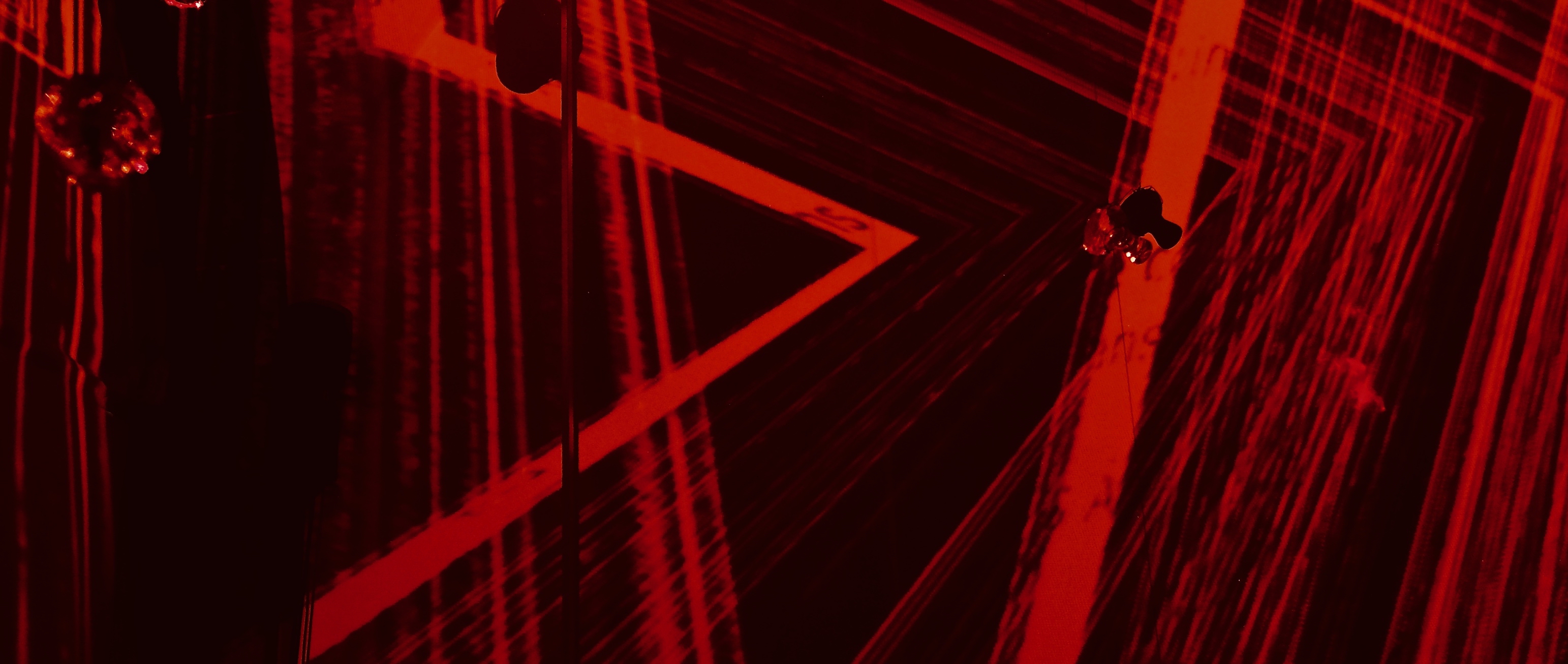
Photo by Kunstuniversität Linz / The Wild State, photo: Su-Mara Kainz
Hamistagan was an interactive immersive new media installion presented at Ars Electronica, Linz(AT)
9-13.09.2020.
This installion was a collaboration with Liisi Sorush, Niko
Tiainen and Kaappo
Lähdesmäki.
Exhibition text by Liisi Soroush:
Hamistagan contemplates on sousveillance, attention economy, opacity and economical shift based on
intellectual property. The premiere took place at the Fortress of Suomenlinna -island which is connected to the
history of the wartimes of Helsinki, Finland. As an experience, it demonstrates the dialogues between past and
present.
In contemporary society, the power structures are extended to online environments – furthermore the process of
surveillance is executed by ourselves using personal mobile devices. Through intuitive user flow, the explicit
metadata (EXIF) gives us away. Meanwhile Google with the help of AI and machine learning together with our
contribution of half-manual labor enable to map out the images of the locations below, such as the underground
fortress and other places out of reach.
At Ars Electronica 2020, Hamistagan both celebrates and observes the diversity of the
international community, the new media scene and nationalities of the participants in 20 different languages.
Whilst representing current forms of oppression in the information age, the algorithms contribute to the
collective production. The choice of interaction resonates with the ubiquitous tracking of data in social
media.
The audiovisual rhythm and pattern are an interplay with the speed of the posts as a reflection from
psychological dimensions as a space to provoke self-awareness. In this manner the participation of the audience
in Hamistagan is embodied in human’s current impulsive sharing in social media- putting an emphasis on
the devious nature of the relationship between humans and technology.
Simultaneously the reference to laser lights initiates the connection to the war and security technology along
with the aural experience being inspired by the military use of parametric speakers. The ultrasound technology
used allows them to direct sound in a straightforward beam that is inaudible outside the target. Parametric
speakers have been used by law enforcement forces since 2000s as Long Range Acoustic Devices to disperse masses
during public demonstrations.
Hamistagan has served as one way to explain and explore phenomena using its material-visual capabilities
that can be serving as an agency for our in-depth research explorations under the observed thematics.
Hamistagan contemplates on forms of freedom (vs. privacy), whatever in connection to MyData and digital
human rights, – crucial discourse topics as the post-pandemic aftermath; all the while the empowered prosumer,
in the era of post -9/11 / the climate crisis / COVID-19, still expresses by means of selfies: “I’m here, I’m
ok”.
The generative soundscape consists of elements of 35mm camera shutter, satellite, submarine, adaptations of the
excerpts of power structures related compositions such as Mozart Symphony No. 36 and Bruckner Symphony No. 4,
the bells of the churches of Suomenlinna and Mariendom Cathedral as depicting the history of the relationship
between power and surveillance.
From a mediaarchaeological perspective the chosen material depicts contemporary media reality. The glass is very
present in our daily means and manners of communication. The glass pieces both inherently and ambiguously
represent transparency and distortion while visuals and laser light controlled by the rate of posts is shot
through.
CREDITS AND THANKS TO: Aalto Media Lab / Philip Dean, Lily Diaz, Janne Ojala, Jyri Lahelma, Kimmo Karjunen,
Petri Kärhä, Teemu Mäntylä & Kari, Pedro Garcia, Keijo Rantasalmi, Jari Hakuli /Terästarvike, Kiki Rasijärvi
/ Ackurat, Jari Hallamaa / Messukeskus
Technical sheet:
-
Space:
- area: 3.7x4.2x2.7m
- location: gallery, Kunstuni Linz
-
Sound System
- channels: 8
- speakers: x4 Paremetric, x4 Active Monitors
-
Light
- laser: x5 1mW laser modules
-
Video
- projectors: x2 laser projectors
-
Glass sculpture
- 7 glassworks
-
Software
- SuperCollider
- Python 3
- instaloader
- InstaPy